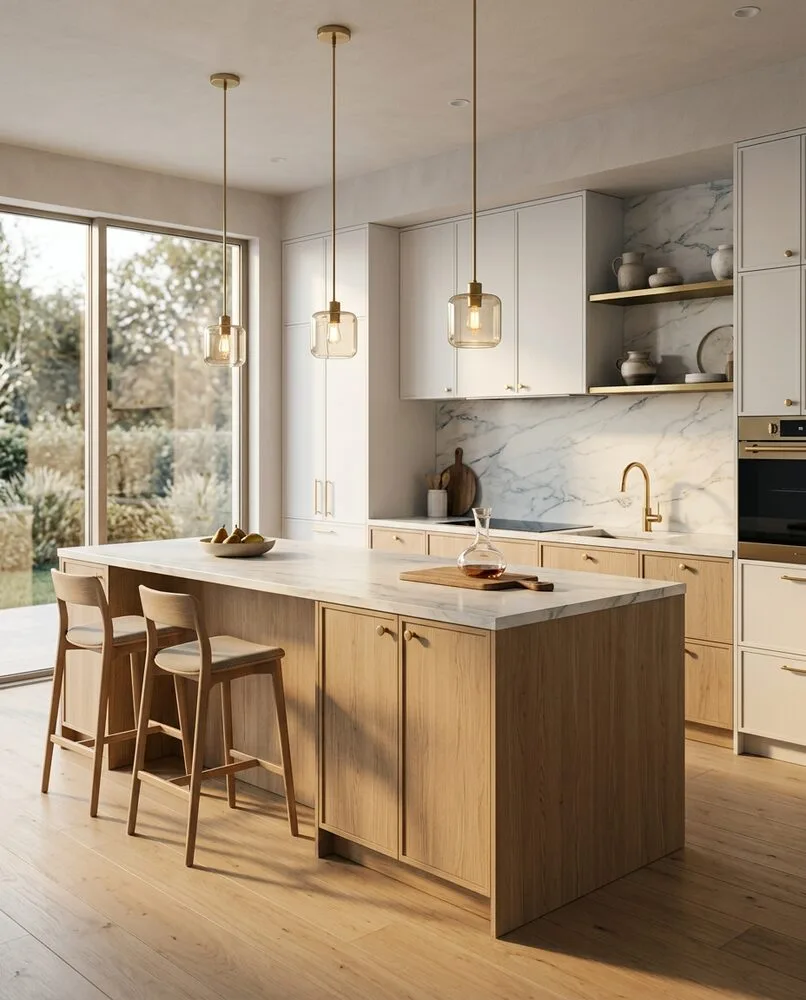


Marble and porcelain are the two materials we're asked about most. Both can give a space a refined, timeless look, and both last for many years when they're installed well. The difference is in how they behave in daily life, how much care they need, and where each one shines.
Marble: natural character
Every marble slab is unique. Its veining and tone come from the stone itself, so no two floors are ever the same. That natural depth is hard to imitate, which is why marble remains the first choice for entrances, formal living rooms and feature walls.
Marble is a natural, porous stone, so it needs sealing and gentle cleaning. Acidic liquids such as lemon juice or vinegar can dull the surface if they're left on it.
Porcelain: consistent and low-maintenance
Porcelain is fired at very high temperatures, which makes it dense, hard-wearing and highly resistant to water and stains. It comes in large formats and in finishes that closely resemble marble, wood or concrete.
That makes it a practical choice for kitchens, bathrooms, busy family areas and outdoor spaces.
How to decide
Think room by room rather than choosing one material for the whole home:
- Choose marble where you want a statement and can give it a little care: entrances, reception areas and feature walls.
- Choose porcelain where water, spills and heavy foot traffic are part of daily life: kitchens, bathrooms and terraces.
- Combining the two is common: marble where guests arrive, porcelain where the family lives.
Installation matters as much as the material
Whichever you choose, the final result depends on surface preparation, careful layout planning and clean, even joints. A consultation with our team helps you match the right material to each room before any work begins.